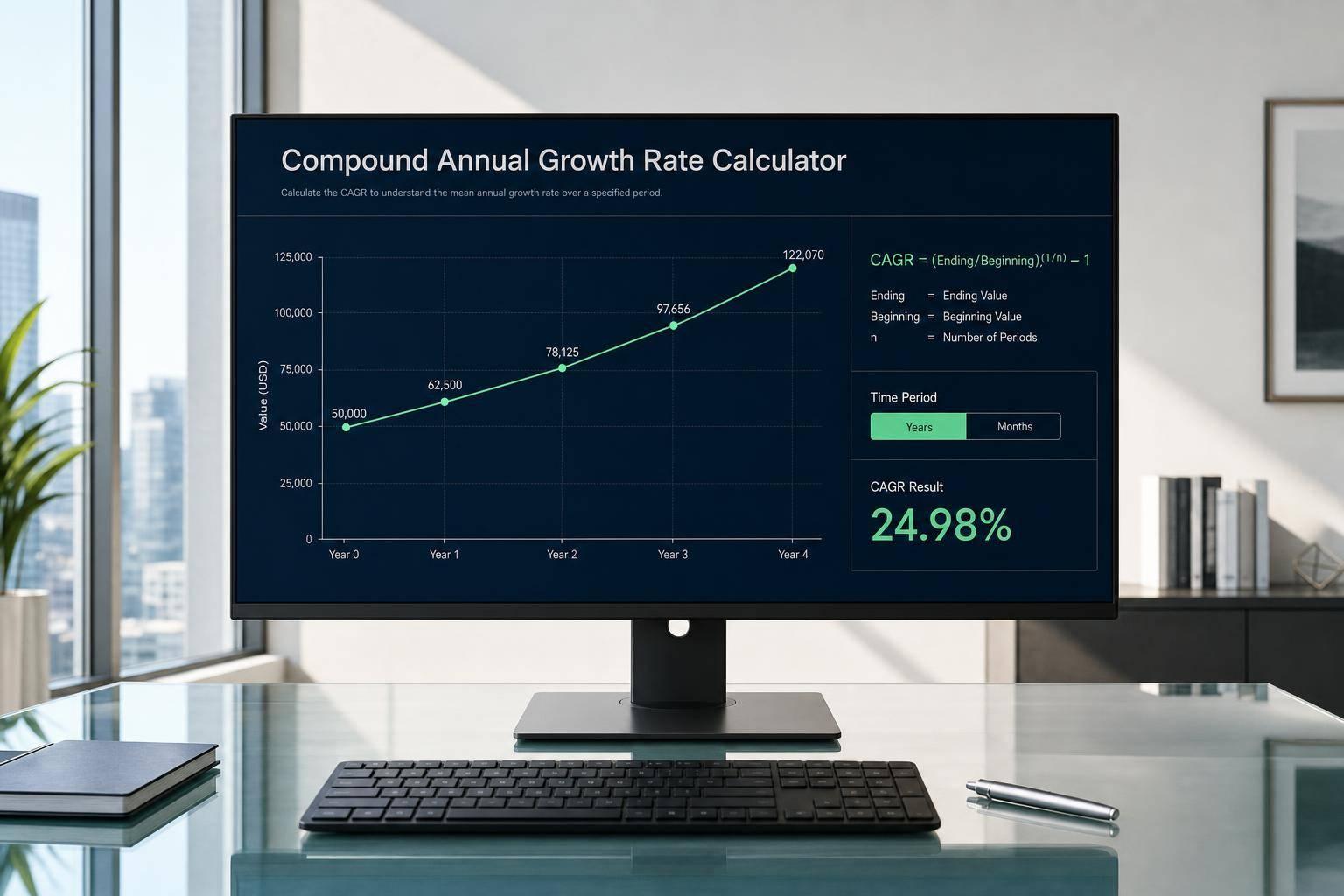
Understand changes at a glance
A percentage increase calculator helps you compare an original number with a new one in seconds. Whether you're reviewing price changes, measuring sales growth, tracking traffic, or checking performance over time, a quick percent change gives you much more context than the raw difference alone.
Why this tool is useful
A jump from 40 to 50 and a jump from 400 to 410 may both look like small changes at first glance, but they tell very different stories. This calculator shows the absolute difference and the rate of change, so you can see the full picture immediately. It also makes decreases easy to spot by displaying them as negative percentages.
Fast, simple, and clear
You don't need a spreadsheet or a manual formula. Enter the starting value and the updated value, and the tool instantly calculates the result. The built-in explanation sentence makes the answer even easier to understand, especially if you're using the number in a report, budget review, classroom setting, or business update.
If you need a reliable percentage increase calculator for everyday math, this tool keeps the process clean, quick, and easy to read.
FAQs
What’s the difference between percentage increase and percentage change?
Percentage increase usually refers to a number going up from its starting point, while percentage change covers both increases and decreases. This tool shows the full percentage change, so if the new value is lower than the original, you'll see a negative result to clearly indicate a drop.
Why does the calculator show an error when the original value is 0?
Because the formula divides by the original value, and division by zero isn't possible. Rather than showing a misleading result, the calculator stops and lets you know that it can't compute a percentage change from a starting value of zero.
Can I use this for prices, sales, traffic, or other metrics?
Yes. The calculator works for any situation where you want to compare an original number with a new one. That includes product prices, revenue, website visits, expenses, test scores, inventory counts, and more. As long as you have a starting value and an updated value, the result is useful.